MJF and FDM 3D Printing
The perception of FDM as a prototyping technology is a decade out of date. Here’s what production FDM actually looks like.
By Mitchell Barnes May 6th, 2026 7 min read
✽ RYSE 3D Milestones
Our Production
Key Metrics
Parts Produced
Our total production volume has exceeded 2 million parts, showcasing our extensive manufacturing capabilities and client trust.
Running Production FDM Since
We have been consistently running FDM production lines since 2017, demonstrating our long-standing expertise and reliability in additive manufacturing.
250
9001 Certified
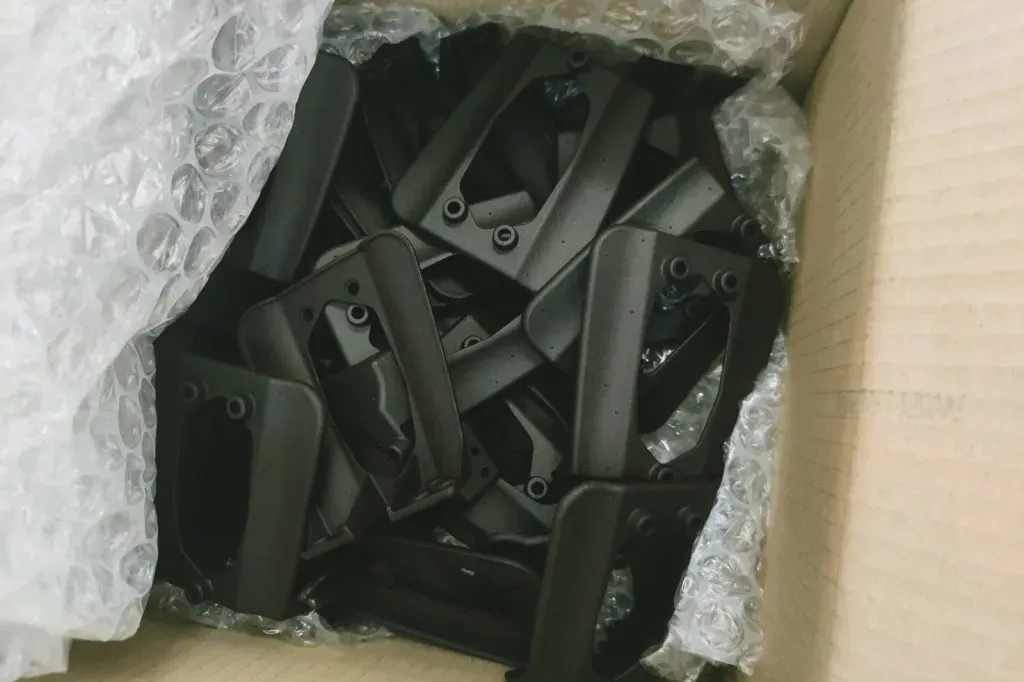

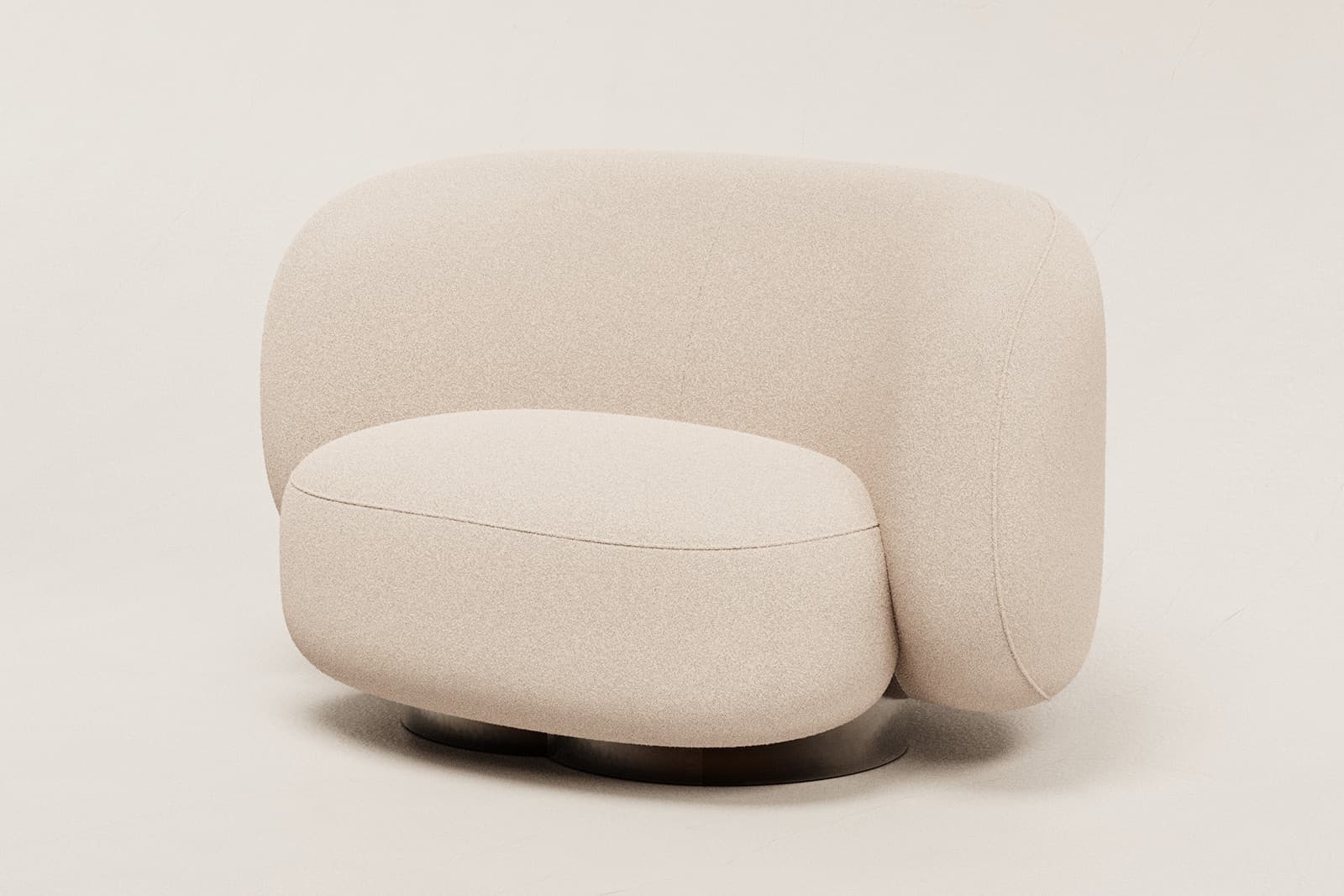
What Changed for FDM and MJF
-
Materials
FDM printing now means carbon fibre composites, glass-filled nylons, PEEK, Ultem, and high-temperature polymers – engineering-grade inputs that match or exceed injection-moulded equivalents in a significant number of applications. MJF runs production PA12, PA12 glass bead, and PA11 – tough, isotropic, chemically resistant parts straight from the build chamber. -
Process Control
The warpage, delamination, and tolerance drift that characterised early FDM are engineering problems that production-grade systems have largely solved. MJF’s powder-bed fusion process delivers consistent mechanical properties in every direction – a structural difference from FDM that matters for safety-critical and load-bearing parts. Thermal management, layer adhesion, dimensional stability – all controllable at scale across both technologies. -
Part Size
Large-format FDM 3D printing means the technology is no longer limited to small components. Panels, housings, structural frames – viable in a single print, without joints, without assembly. MJF’s build chamber lets you nest hundreds of small-to-medium parts per build, making serial production runs economically viable at volumes previously locked behind injection moulding tooling. -
Quality Infrastructure
ISO 9001 certification, material traceability, first article inspection, documented process parameters. The quality management frameworks production customers need are now standard at any serious 3D print service running production-grade FDM and MJF.
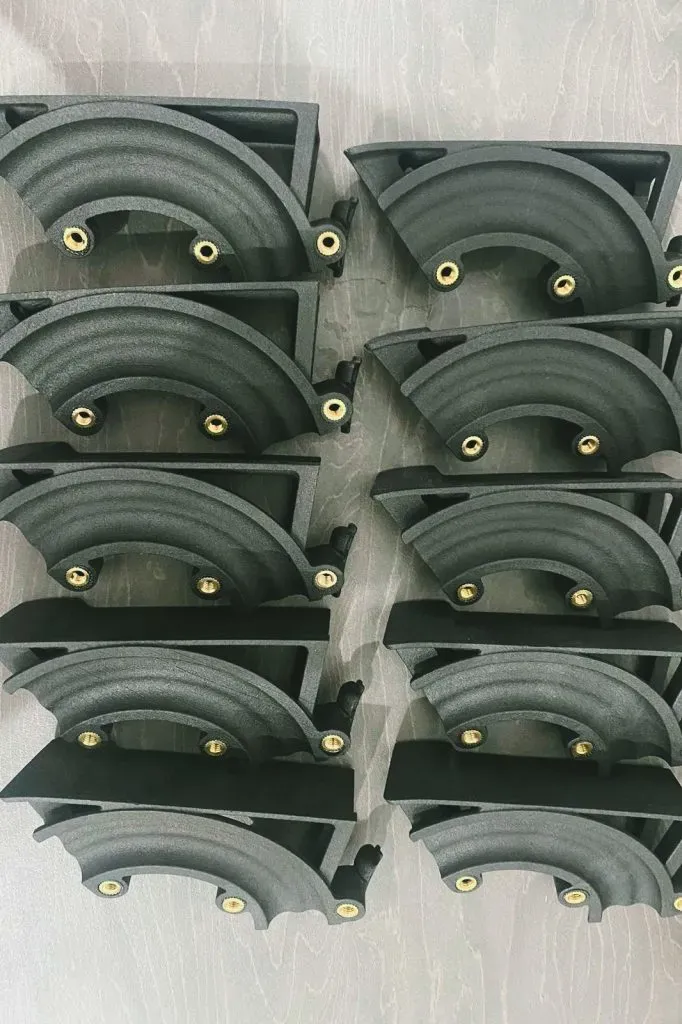
What Production FDM End-Use Parts Actually Look Like
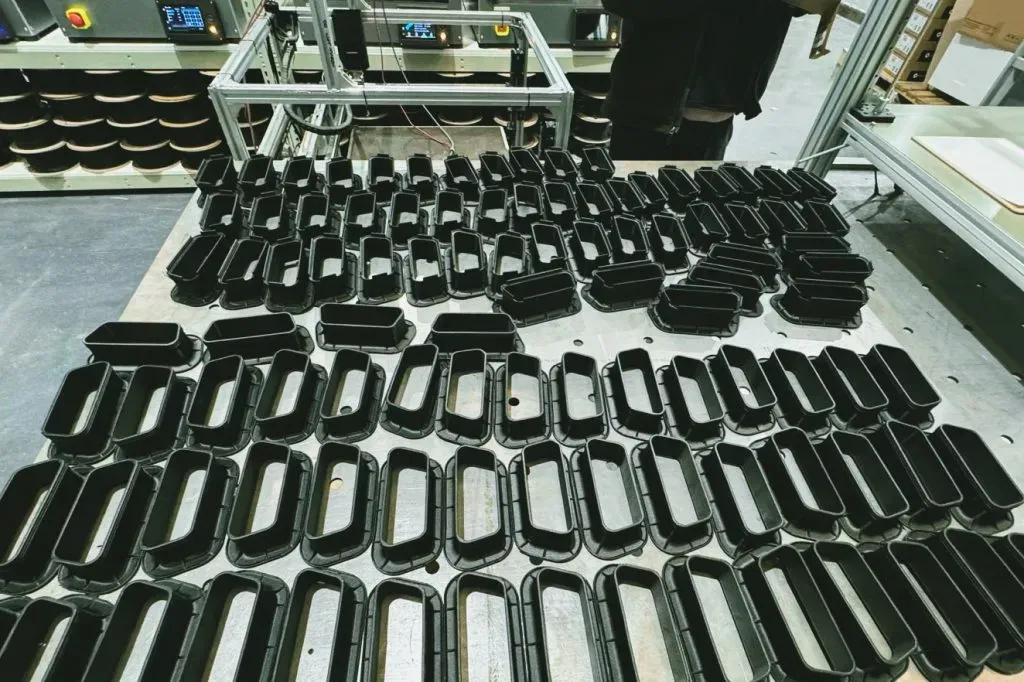
Production MJF and FDM parts aren’t prototypes used in anger because the budget ran out. They’re deliberately specified, engineered parts – in the right material for the application, produced at the right volume, documented to the level the application demands.
01 Low-to-Medium Volume End-Use Parts
FDM · MJF · SLS
Where injection moulding requires tooling investment that only makes sense above a certain volume threshold, production FDM has no tooling cost. For runs of 1 to 10,000 parts, FDM is frequently the most cost-effective route.
02 Parts with Complex Internal Geometry
FDM · SLS · MJF
Injection moulding struggles with undercuts, internal channels, and complex features. FDM produces these as standard – manifolds, ducting, housings with integrated features – often producing a better part at lower total cost.
03 High-Mix, Low-Volume Programmes
FDM · CARBON FIBRE
Many variants at low volumes per variant. Tooling a separate mould for each variant is economically absurd. Production FDM handles variant programmes by changing the file, not the tooling.
04 Parts Requiring Rapid Design Iteration
FDM · MJF
When a design changes on a live programme, production FDM responds in days. No retooling, no lead time, no minimum order commitment. For programmes where design iteration doesn’t stop at the prototype phase, this is a structural advantage.
05 Replacement & Obsolescence Parts
FDM · SLS · MJF
Where an original part is no longer available and retooling isn’t viable, production FDM steps in. The result isn’t a bodged substitute – it’s a properly specified, qualified part in an appropriate engineering material.
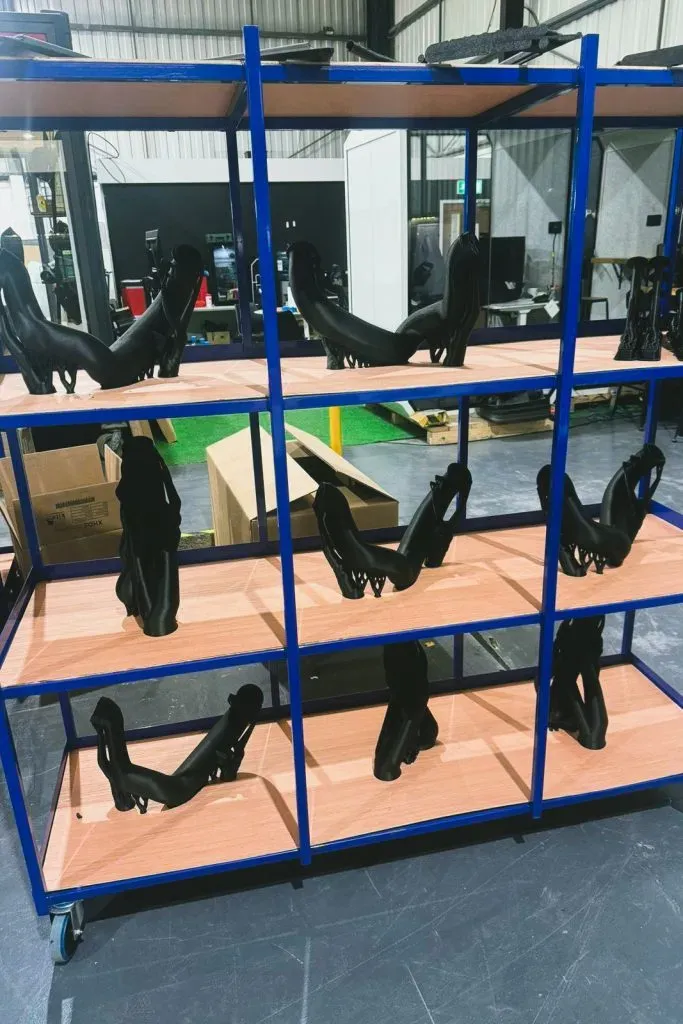
Carbon Fibre Composite FDM
Stiffness-to-weight ratios that compete with aluminium in many structural applications.
Engineering Nylons
PA12 · PA6 · GLASS-FILLED
High-Temp Polymers
PEEK · ULTEM · PC
ASA & ABS Engineering Grades
UV STABLE · IMPACT RESISTANT
For applications where standard engineering polymers aren’t enough
Used for structural brackets, jigs, automotive components, and aerospace-adjacent applications.
The workhorse of production FDM.
The workhorse of production FDM. Tough, chemically resistant, dimensionally stable.
The Business Case in Plain Terms
Injection Moulding Route
Tooling cost
£5k-£50k
Lead time
8-16 weeks
Design changes
Retool required
Minimum order
High MOQ
Variants
New tool per variant
FDM / MJF Production Route
Understand the costs associated with tooling for your project.
Tooling Cost
See the initial investment required for tooling.
£0
Experience the efficiency of rapid turnaround times.
Lead Time
Benefit from quick delivery within 24-72 hours.
24-72 Hours
Your data is protected by advanced encryption and security protocols, keeping your personal information safe.
See how easy it is to implement design modifications.
Simply upload a new file to make design changes.
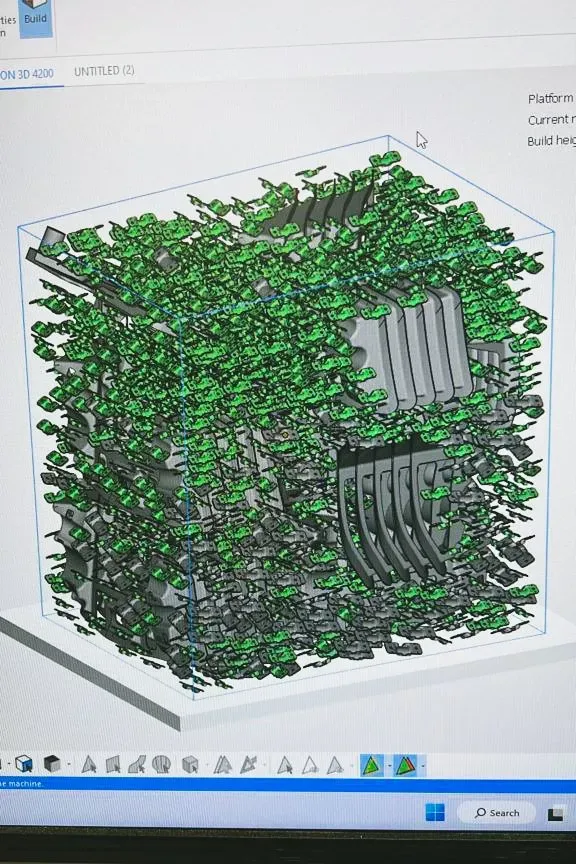
For volumes below the tooling break-even point – which for complex parts can be in the tens of thousands of units – production FDM and MJF aren’t a compromise. They’re the economically correct answer. The break-even shifts further in their favour as part complexity increases, variant count increases, and programme volumes become less predictable.
The manufacturers who have worked this out are already running production FDM programmes. The ones who haven’t are still paying tooling costs for parts that didn’t need them.
Why RYSE 3D for FDM and MJF 3D Printing in the UK
There’s a meaningful difference between a generalist 3D print shop and a production-grade 3D printing service. The distinction isn’t marketing – it shows up in part quality, run consistency, and the documentation that comes with the order.
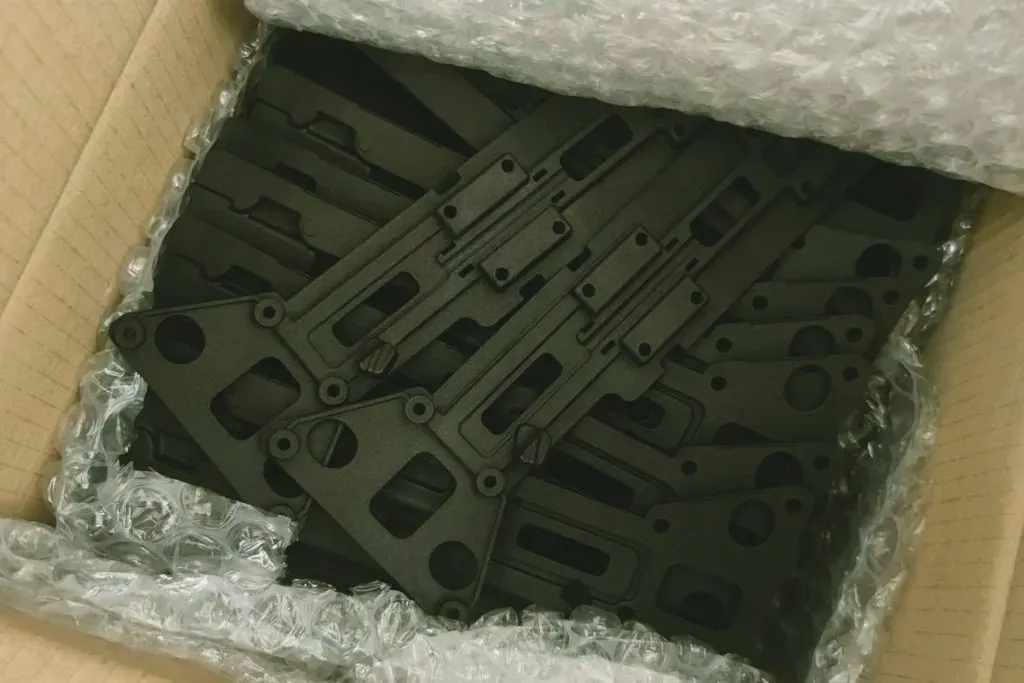
RYSE 3D has been producing FDM and MJF end-use parts for industrial customers since 2017. Over 2 million parts produced. ISO 9001 certified. Two King’s Awards – one for Innovation, one for International Trade. Based in Warwickshire, serving customers across the UK and internationally.
Material traceability from input batch to finished part. First article inspection against customer tolerances. Documented process parameters held consistently across a production run. A quality management system built for parts that go into real applications – not a prototype shop operating without a net.
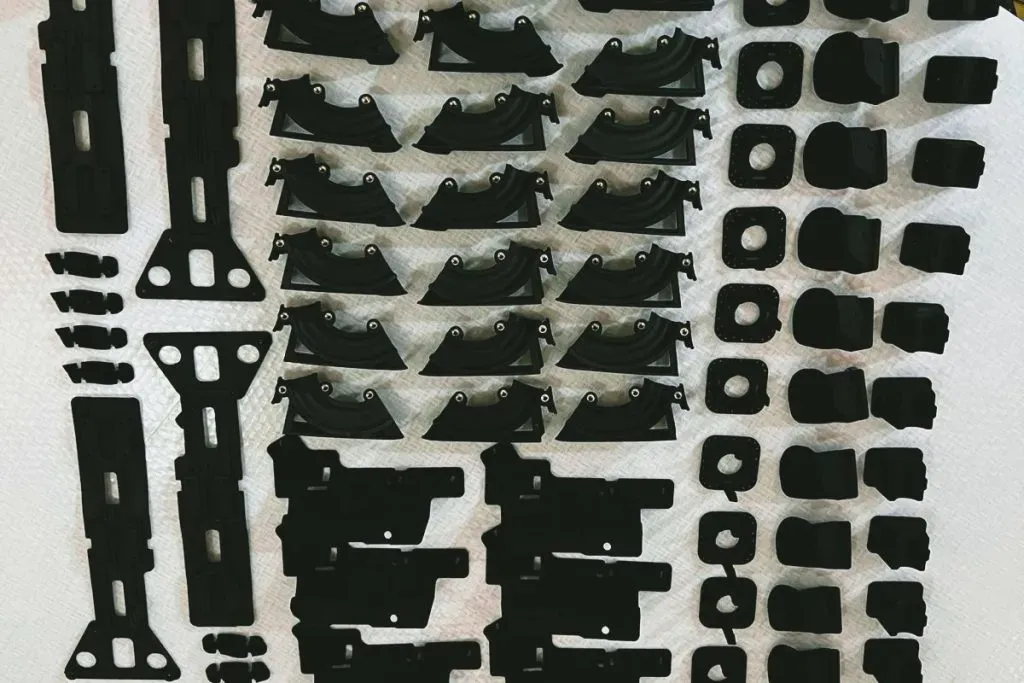
Parts that other UK 3D printing services would split and bond, RYSE 3D produces whole. That’s not a marginal improvement – it’s a structurally better part with fewer failure points, lower assembly cost, and faster lead time.
Where can I find FDM 3D printing services near me in the UK?
For production-grade work, geography matters less than capability. FDM and MJF 3D printing at production scale happens at a small number of properly equipped UK facilities, and parts ship overnight. RYSE 3D dispatches from Warwickshire on next-day delivery as standard across the UK.
What’s the difference between FDM and MJF?
FDM (Fused Deposition Modelling) extrudes material layer by layer – strong in carbon fibre composites and high-temp polymers, ideal for larger parts and structural applications. MJF (Multi Jet Fusion) is a powder-bed process producing isotropic PA12 parts with excellent surface finish – ideal for higher-volume runs of small to medium parts.
Is FDM 3D printing suitable for end-use production parts?
Yes – when the right materials and process controls are used. RYSE 3D has produced over 2 million FDM and MJF parts for industrial customers since 2017, including parts going into automotive, defence, and industrial applications.
What’s the minimum order for a 3D print service?
At RYSE 3D, zero. Single parts through to multi-thousand part production runs all run through the same quality system.
How quickly can I get a 3D printing quote in the UK?
Instant quote available online at ryse3d.com/instant-quote — STL upload, GBP pricing, no sales call required.
Next Steps
If you have a part currently in injection moulding, machining, or sitting unresolved because the tooling cost doesn’t make sense at the volumes you need, talk to us. We’ll tell you whether production FDM is the right answer, what material it should be in, and what the economics look like against your current route.
No tooling cost. No minimum order. Production quality. Based in Warwickshire, serving the UK.
Quality, Speed, and Support
Discover the core benefits that set us apart.

Reliable Service
Dependable performance and availability ensure your operations run smoothly with minimal disruption.

Fast Delivery
Swift processing and efficient resource utilization for enhanced productivity and customer satisfaction.

Expert Support
Dedicated assistance and guidance to help you navigate challenges and achieve your goals.