MJF 3D Printing for High-Performance Automotive Parts
Production-grade nylon components for prototyping, low-volume builds, motorsport, and restomods. Discover the precision and durability of MJF 3D printing for your automotive needs.
Production-grade nylon components for prototyping, low-volume builds, motorsport, and restomods
The biggest shift in automotive manufacturing isn’t just EVs—it’s how fast teams can design, validate, and produce parts without tooling delays. Multi Jet Fusion (MJF) has become a go-to process for engineers and builders who need real mechanical performance, repeatable fit, and complex geometry without the cost and lead time of injection mould tooling.
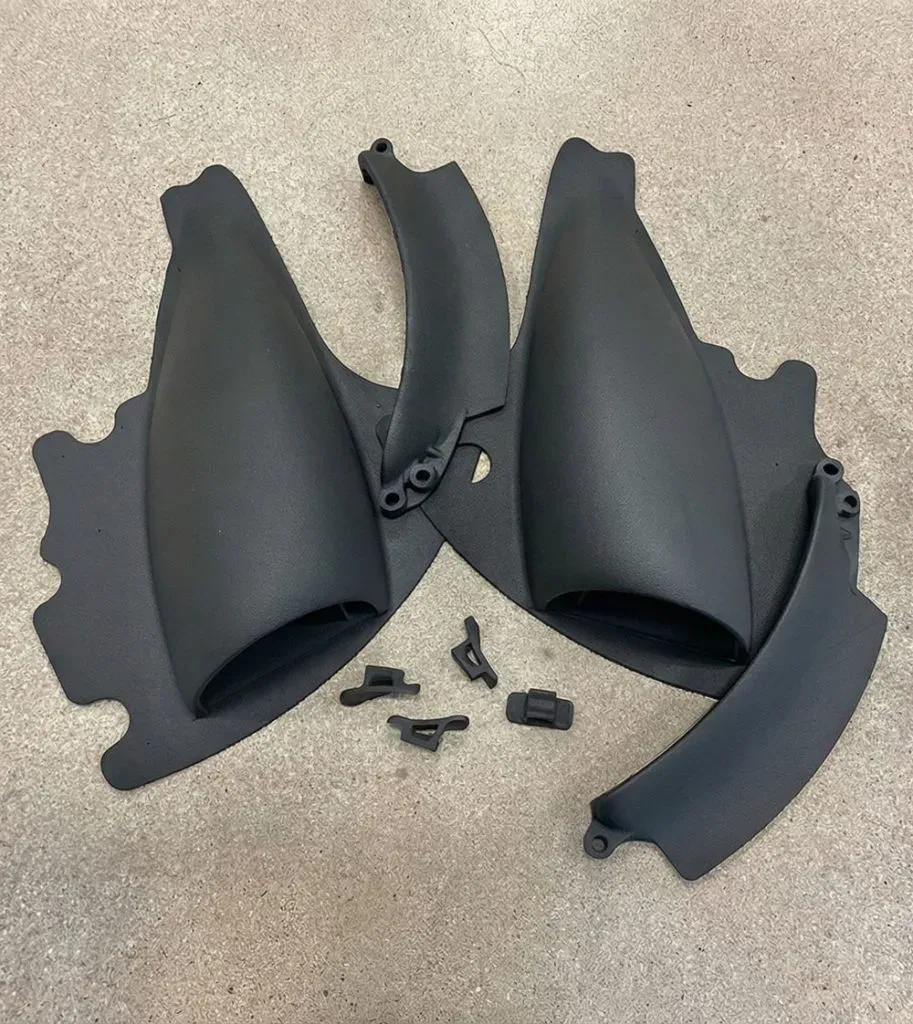
At RYSE 3D, we use MJF to deliver functional automotive components—from under-bonnet ducting and housings to interior brackets and motorsport prototypes—with finishing, inserts, and quality checks to suit end-use requirements.

What is MJF? High-Performance Automotive 3D Printing for Car Parts Explained
MJF builds parts in nylon powder by selectively applying fusing/detailing agents, then using infrared energy to form each layer. The result is a dense, consistent polymer part with excellent repeatability across a production batch.
Why customers choose MJF for automotive work:
- Functional strength and durability suitable for end-use polymer components
- No support structures, enabling clean internal geometry (ducts, channels, clips)
- Batch efficiency, so small runs are commercially viable
- Fast iteration, allowing real test parts in days rather than waiting on tools
Driving Automotive 3D Printing Innovation: Which Car Parts are Best Suited to MJF?
MJF is ideal when you need strong, accurate polymer parts with complex features, but you do not want tooling investment or long lead times.
Common MJF automotive applications include:
Under-bonnet (cool/ambient to moderately warm zones)
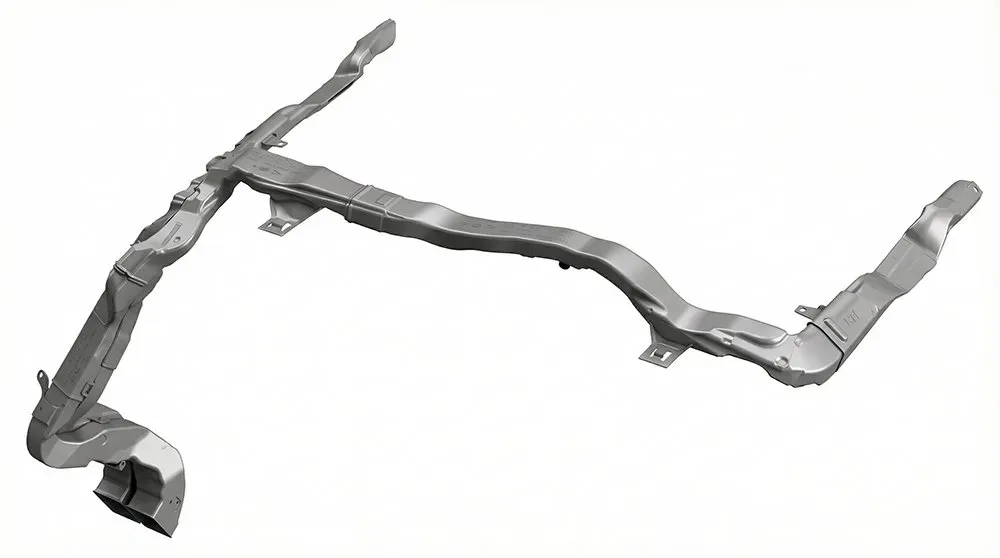
- Air ducts, intake snorkels, diverters, shrouds
- Sensor housings, electrical enclosures, protective covers
- Brackets, clips, retainers, cable management
- Lightweight mounts for ancillaries and trim components
Cabin and interior
- Vents, bezels, switch panels, trim brackets and retainers
- Custom consoles, mounts, holders, and restorations of discontinued trims
- Functional prototypes for ergonomics, packaging and fit checks
Motorsport and specialist builds
- Rapid iteration parts between test days
- Lightweight housings and integrated assemblies
- Consolidated parts that remove fasteners and joints
Manufacturing support for automotive programmes
- Jigs, fixtures, drill guides, checking aids, protective nests
- Assembly tooling and repeatable positioning aids
Advanced 3D Printing for Automotive
Explore the capabilities of Multi Jet Fusion (MJF) for creating robust and precise automotive components. Primarily utilizing PA12 (Nylon 12), MJF parts offer a superior blend of durability and performance.
This material excels in mechanical strength, impact resistance, and maintains excellent dimensional stability, ensuring repeatability for critical applications.
Its resistance to common automotive fluids and chemicals further enhances its suitability. For specialized needs, consider PA11, TPU, or reinforced nylons. Provide us with your environmental parameters, and we'll recommend the optimal solution.

Accuracy and Tolerances: “Will It Fit First Time?” Mastering the Precision of Automotive 3D Printing for the Modern Car
MJF is well suited to parts that must assemble reliably—ducts, housings, brackets, trim components, and repeat production batches.
As a practical guideline, we work to typical MJF tolerances around ±0.1 mm on many standard features. Final achievable tolerance depends on part size, geometry, wall thickness, and build orientation.
For critical interfaces—such as bearing/shaft fits, sealing faces, precision datums, tight bores, and aligned hole patterns—we typically:
- Design in a controlled allowance, then
- Specify post-machining (reaming/drilling/facing) or threaded inserts where appropriate
This approach delivers the speed of MJF with the precision where it genuinely matters.
Engineered for the Road: Strength and Durability in Automotive 3D Printing
MJF nylon parts are often misunderstood as “prototype only.” In practice, MJF produces tough polymer components that perform well under vibration and repeated handling—ideal for many automotive end-use applications.
Where customers see the most value:
- Robust brackets and housings that don’t crack like brittle plastics
- Clips/retainers designed for repeat assembly
- Ducting and shrouds that maintain shape and fit under real operating conditions
Replacement of Injection mould parts during tool modificationa to act as reliable bridge production options.
Parts with clipping features
Mounting saddles for cables
If athe application is load-bearing or heat-critical, we will validate the design intent with you and recommend the most appropriate manufacturing route.
Elevating Your Car Parts: Finishing Options in Automotive 3D Printing
MJF parts typically have a uniform matte surface that is excellent for functional use and provides a good base for finishing. Common finishing routes include:
- Bead blasting for a consistent appearance
- Black dyeing for under-bonnet and interior parts
- Painting for colour match and cosmetic presentation
- Sealing/smoothing options where airflow, wipe-clean surfaces, or reduced porosity are important
- Heat-set or press-fit inserts for reliable threads and serviceability
If the part is visible (interior/exterior), we will define the finishing route upfront so the final look matches expectations.
Reviving the Car Classics: How Automotive 3D Printing Saves the Restomod Scene
Classic and specialist vehicles often suffer from “unobtainium” parts—clips, housings, trims, ducting, and brackets that are no longer available. RYSE 3D can support:
- 3D scanning of original components
- CAD reconstruction and improvement (strengthening, clip geometry, tolerance updates)
- Repeatable MJF production so spares remain available
This is also the foundation of digital inventory: store the CAD and print on demand rather than holding slow-moving stock.
From car parts Prototype to Production: Mastering Automotive 3D Printing Without Complex Tooling
Injection moulding is excellent at scale, but it penalises low volume and design changes. MJF allows you to:
- Go CAD to parts in days
- Iterate quickly and cheaply
- Move into small-series production without committing to tooling
- Support legacy platforms with on-demand spares
For OEM development teams and specialist builders, this often removes months of delay and enables better engineering decisions sooner.
Don’t Overpay for Parts: How to Quote Automotive 3D Printing for Any Car Project
To provide an accurate quote (and the right material/finish), send:
- STEP file (preferred) or STL, plus quantity
- Where it will be used (engine bay/cabin/exterior)
- Temperature estimate and fluid exposure (oil, fuel mist, coolant, cleaners)
- Any load case or “must not fail” features
- Finish requirement (functional, dyed black, painted, sealed, inserts, etc.)
Speak to RYSE 3D about your MJF automotive part
If you need a functional nylon car part—prototype, low-volume production, motorsport iteration, or a discontinued replacement—MJF is often the fastest and most commercially sensible route. Send the CAD, or send the part for scanning, and we’ll recommend the right material, finish, and manufacturing strategy to match how the component will actually be used.
Our Commitments
Discover the advantages of choosing us for your needs.

Fast Shipping
Get your orders delivered quickly and without any extra cost.

Instant Pricing
Receive immediate price estimates for your required parts.

Secure Payment
Your financial details are protected with our secure payment system.